
Stitch guide · Texture and details
How to do a straight stitch
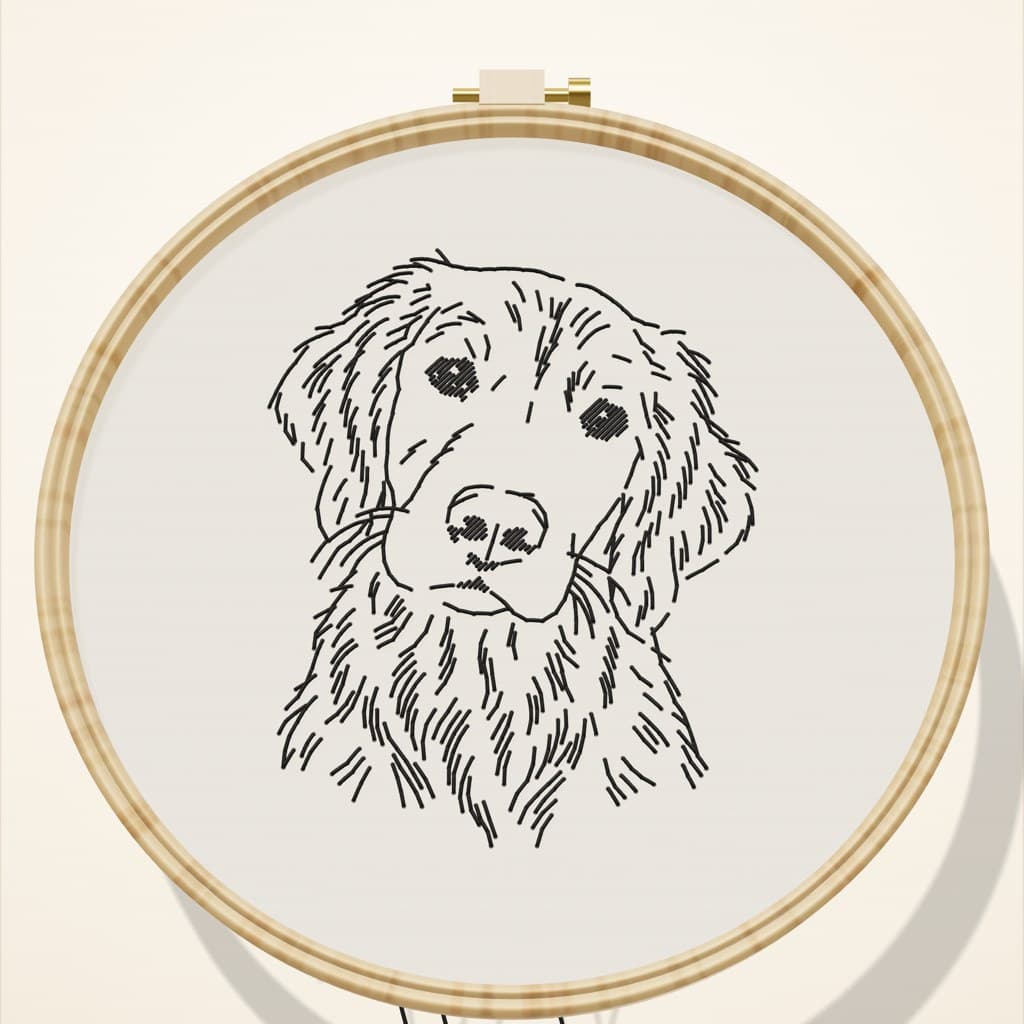
Straight stitch is a single stitch: up through the fabric at one point and down at another. It's the building block of many other stitches. On its own, use it for whiskers, eyelashes, short fur strokes and tiny details. Change the length and angle of each stitch to suggest texture.
- Level Beginner
- Practice Free in the 3D simulator
Use it in a pet portrait for…
- Whiskers: one fine stitch each, fanning out from the muzzle.
- Eyebrows, lashes and a few wispy hairs at the ears.
- A tuft of fur on the chest, with each stitch at a slightly different angle.
How to do it, step by step
Each straight stitch is one trip up and one down: up at 1, down at 2. Change the length and angle from stitch to stitch, the way fur grows.
1 Odd numbers: come up from the back2 Even numbers: go down Dashed: the next stitch
- Come up at one end of the stitch.
- Go down at the other end. That's one straight stitch.
- Come up where the next stitch starts. If it's far away, slide under the backs of stitches you've already made, or end off and start again, so dark thread doesn't show through light fabric.
- Go down at its other end.
- Vary the length and angle from stitch to stitch so fur looks natural.
- Finish on the back by sliding under a few stitches.
Free · 3D Stitch Simulator
Try straight stitch on a 3D hoop
Watch the first stitches, then tap where your needle goes. Turn the hoop, zoom in, and flip it over to check the back.
Common mistakes and how to fix them
- Long stitches that sag or snag.
- Keep straight stitches fairly short. For a long line, use back stitch, or couch the long stitch down with tiny stitches.
- Shadows on the front.
- Dark thread carried across the back shows through light linen. Travel under stitches you've made, or end off and restart.
- Stiff, too-regular fur.
- Change the length and angle a little each time, the way real fur grows.
How many strands?
One strand for whiskers and fine lashes, two for fur strokes and everyday details.
Embroidery floss comes as six thin strands twisted together. Cut a length from your fingertips to your elbow, pull out the strands you need one at a time, and lay them back together (DMC’s guide to stranded floss).
Questions people ask
What's the difference between straight stitch and running stitch?
A straight stitch is one stitch on its own. Running stitch is a row of straight stitches with even gaps, all along one line.
How long can a straight stitch be?
There's no fixed limit, but long stitches can sag and catch on things. If a stitch gets long, tack it down with a tiny stitch or switch to back stitch.
Do I need a knot to start?
No. A loop start (when you're stitching with an even number of strands) or a waste knot keeps the back flat, with no knot to show through.
Sources: Royal School of Needlework Stitch Bank: Straight stitch · Needle 'n Thread: A clean start with two strands · Needle 'n Thread: Starting and traveling threads