Stitch guide · Outlines
How to do a stem stitch
Stem stitch is an outline stitch that makes a smooth, slightly raised line with a gentle twist, like a little rope. Each stitch overlaps the last by half, with the thread kept on the same side. It's lovely on curves, stems, ears and any line you want softer than back stitch.
- Level Easy
- Also called Outline stitch (its twin)
- Practice Free in the 3D simulator
Use it in a pet portrait for…
- The soft curve of an ear, a chin or a tail.
- Flowing fur lines on a smooth-coated dog.
- Flower stems or a curling ribbon in a border.
In the Stitch Your Dog course, this kind of twisted line is an option for ears and curves. The main lines are back stitch.
How to do it, step by step
Up at 1, down at 2. With the thread held below the line, come up at 3, halfway back and right beside the first stitch, then down at 4. Each stitch overlaps the last by half.
1 Odd numbers: come up from the back2 Even numbers: go down Dashed: the next stitch
- Come up at the start of your line.
- Go down one stitch length along the line, leaving the thread a little slack for now.
- Hold the loose thread to one side of the line. Come up halfway back along that stitch, right beside it.
- Pull the slack snug, then go down one stitch length ahead.
- Come up halfway back along the new stitch, where the first stitch ended. Keep the thread on the same side every time.
- On curves, turn the hoop as you go and make the stitches a little shorter.
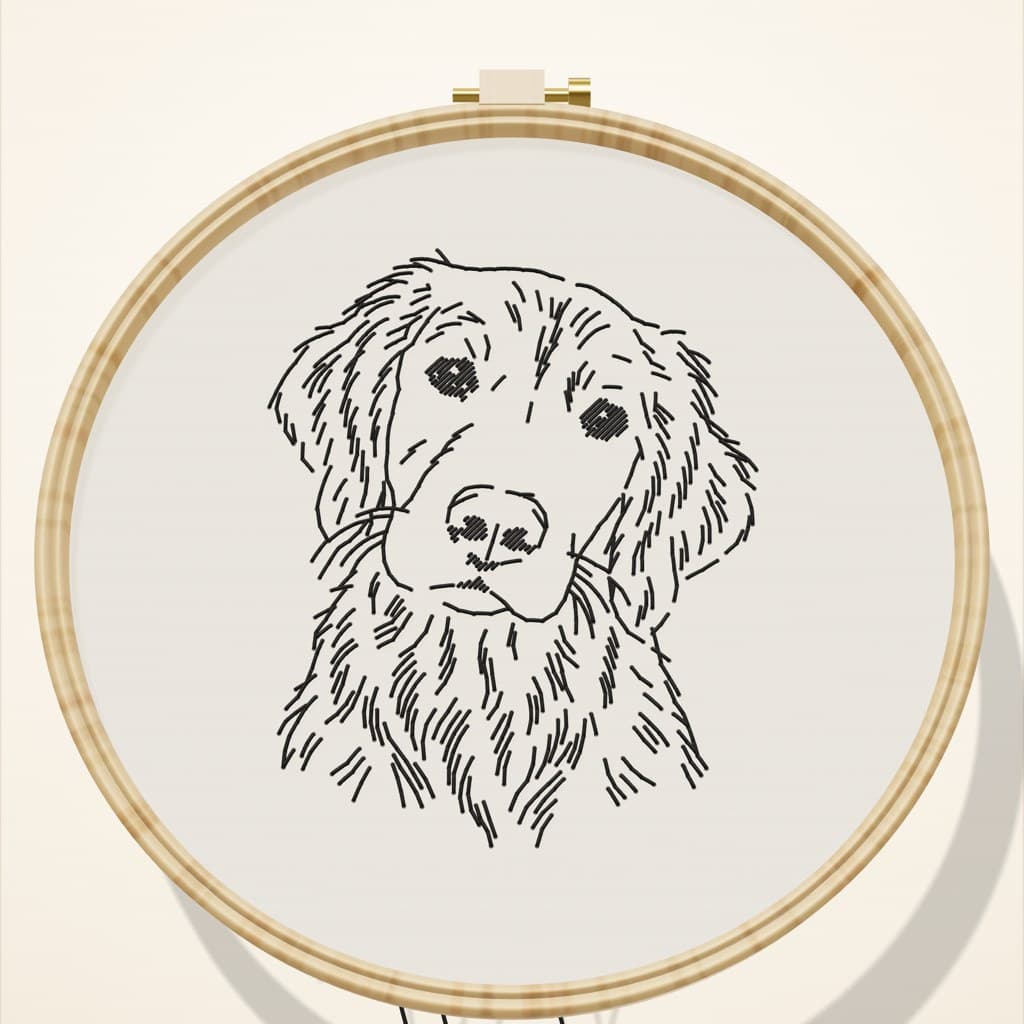
Free · 3D Stitch Simulator
Try stem stitch on a 3D hoop
Watch the first stitches, then tap where your needle goes. Turn the hoop, zoom in, and flip it over to check the back.
Our simulator teaches this as outline stitch, stem stitch's twin: the same motion, with each stitch overlapping the last by half and the thread kept on one side.
Common mistakes and how to fix them
- The twist changes direction.
- Keep the working thread on the same side of the needle for the whole line. Switching sides flips the twist.
- Jagged curves.
- Shorten the stitches on tight curves, and turn the hoop instead of switching sides.
- Gaps in the line.
- Come up halfway along the last stitch, right beside it, so each stitch overlaps the last by half.
How many strands?
Two strands for a fine line, three for a fuller, rope-like look.
Embroidery floss comes as six thin strands twisted together. Cut a length from your fingertips to your elbow, pull out the strands you need one at a time, and lay them back together (DMC’s guide to stranded floss).
Questions people ask
What's the difference between stem stitch and outline stitch?
They're made the same way. The only difference is which side of the needle you keep the thread on, which changes the direction of the twist. Some books swap the two names.
Which side do I keep the thread on?
Either side works. What matters is keeping it on the same side for the whole line.
Is stem stitch good for curves?
Yes, it's one of the best. Make the stitches shorter as the curve gets tighter, and turn the hoop as you go.
Should I use stem stitch or back stitch?
Back stitch gives a flat, crisp line. Stem stitch gives a softer, slightly raised line with a twist. Many stitchers use back stitch for the main lines and stem stitch for curves.
Sources: Royal School of Needlework Stitch Bank: Stem stitch · Needle 'n Thread: Stem stitch on tight curves